Biblically accurate demons are very different from the frightening creatures often shown in movies, games, and popular culture. The Bible does not focus on giving demons a detailed physical appearance. Instead, Scripture focuses on their nature, actions, influence, and ultimate defeat under God’s authority.
In this guide, we’ll explore biblically accurate demons from a Scripture-centered perspective, including the Hebrew and Greek terms used for evil spirits, what the Bible says about their origin, how they influence people, and the limits of their power. We’ll also examine the difference between biblical teaching and later ideas about demons.
Whether you’re studying Christian theology, researching biblical demonology, or simply curious about what the Bible actually says, this guide will help you separate biblical truth from pop-culture myths and understand the subject through the lens of Scripture.
Understanding Biblical Terminology: Biblically Accurate Hebrew and Greek Words for Demons
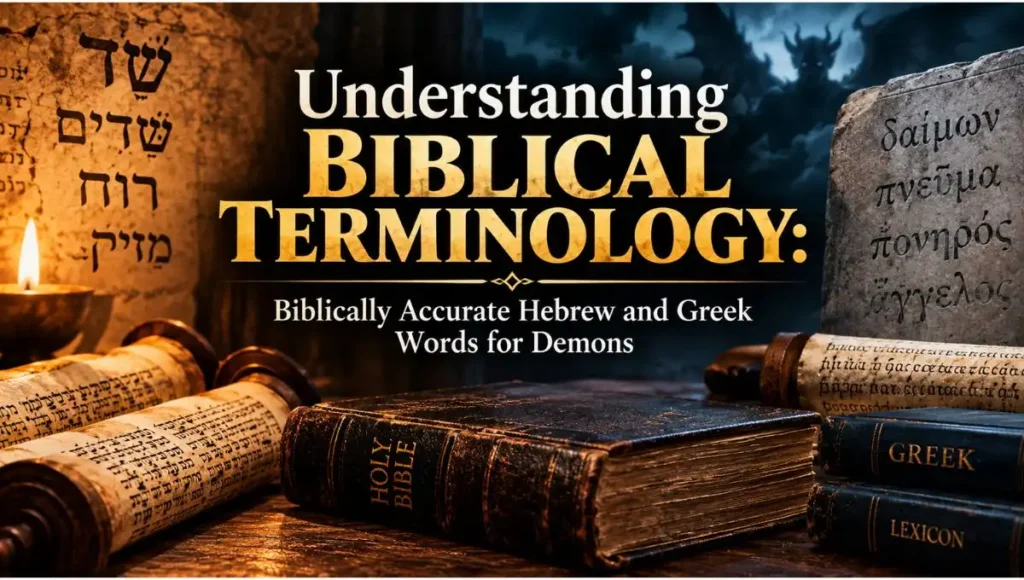
Before defining biblically accurate demons, it helps to know the words the Bible uses. Different terms point to different ideas.
| Term | Language | Meaning | Key passage |
| shedim | Hebrew | Demons linked to idol worship | Deut. 32:17; Ps. 106:37 |
| se’irim | Hebrew | “Hairy ones,” goat-idols | Lev. 17:7 |
| ruach ra’ah | Hebrew | Evil spirit | 1 Sam. 16:14 |
| daimonion | Greek | Demon | Matt. 8:31 |
| pneuma akatharton | Greek | Unclean spirit | Mark 1:23 |
| pneuma ponēron | Greek | Evil spirit | Luke 7:21 |
| diabolos | Greek | Slanderer, devil | Matt. 4:1 |
The Old Testament is more mysterious and uses fewer terms. The New Testament speaks more directly, especially in the Gospels.
Complete Biblical Taxonomy of Demons and Evil Entities
The Bible gives no single chart of evil beings. Still, we can group them by what the text says.
| Category | Names or descriptions | Key passage |
| Satan | Adversary, devil, Beelzebul, Belial | Job 1; Matt. 12:24; 2 Cor. 6:15 |
| Fallen angels | Angels who sinned | 2 Pet. 2:4; Jude 6 |
| Demons and unclean spirits | Legion, lying spirits | Mark 5; 1 Kings 22:22 |
| Rulers and powers | Principalities, cosmic powers | Eph. 6:12; Dan. 10:13 |
| Ambiguous entities | Azazel, Lilith, Leviathan, Abaddon | Lev. 16; Isa. 34:14; Job 41; Rev. 9:11 |
This taxonomy shows that biblically accurate demons are one group inside a larger unseen conflict.
What Does the Bible Say About Demons and Their Origin?
Scripture treats demons as real, personal, and created beings. They are never equal to God.
Who Are Biblically Accurate Demons? Fallen Angels and Unclean Spirits Explained
Most Christian traditions teach that demons are angels who followed Satan in rebellion. Jude 6 and 2 Peter 2:4 speak of angels who sinned. Revelation 12:9 says the dragon was thrown down and his angels with him.
The Bible calls them “unclean” because they stand against God’s holiness. Some readers link them to the spirits of the Nephilim in Genesis 6, but Scripture does not confirm this. It remains a minority view.
Key traits shown in the text:
- Spiritual, not physical: they act unseen (Eph. 6:12).
- Intelligent: they recognize Jesus (Mark 1:24).
- Personal: they speak, choose, and plan (Matt. 12:44).
- Aware of God: they believe and shudder (James 2:19).
- Already judged: they fear their end (Matt. 8:29).
These traits define biblically accurate demons better than any horror-movie image.
How Did Demons Originate According to the Bible? Satan’s Rebellion and the Fall
God made everything good, including angels (Gen. 1:31; Col. 1:16). Evil began when created beings chose pride over obedience.
Jesus said He saw Satan fall like lightning (Luke 10:18). Isaiah 14 and Ezekiel 28 address human kings, though many readers see a deeper echo of Satan’s fall there. Scholars debate this.
The Bible is quiet about timing and details. That silence matters, because guesses should never replace what biblically accurate demons are shown to be in Scripture.
Biblically Accurate Understanding of Ambiguous Entities and Satan
Satan is the leader, not a rival god. He is called the accuser, the tempter, the ruler of this world, and the father of lies (John 8:44; 12:31).
Other figures are harder to classify:
- Azazel: linked to the Day of Atonement (Lev. 16), and the text is unclear.
- Lilith: appears once in Isaiah 34:14, and translations vary.
- Leviathan: a symbol of chaos that God defeats (Ps. 74:14; Isa. 27:1).
- Legion: a group of demons, not one (Mark 5:9).
A wise reader admits uncertainty. Not every dark figure in Scripture fits the label of biblically accurate demons.
Read More: 40 Bible Verses About Breaking Generational Curses
How Christian Demonology Developed Through Extrabiblical Sources
Many popular ideas about demons come from outside the Bible. Some texts and thinkers shaped later Christian teaching:
- 1 Enoch: tells of the Watchers, and Jude 14–15 quotes it.
- Jubilees and Dead Sea Scrolls: show how Second Temple Jews viewed evil spirits.
- Church Fathers: Origen and Augustine explained the fall of angels.
- Aquinas and Pseudo-Dionysius: built angel and demon hierarchies.
- Dante and Milton: gave the West its vivid images of hell and Satan.
These works influenced culture, but they are not Scripture. Keep them separate when studying biblically accurate demons.
How Do Demons Influence and Oppress According to Biblical Accounts?
The Bible shows several ways demons work:
- Temptation: Satan tempts Eve and Jesus (Gen. 3; Matt. 4).
- Deception: he disguises himself as an angel of light (2 Cor. 11:14).
- Accusation: he accuses believers day and night (Rev. 12:10).
- Affliction: a spirit crippled a woman for 18 years (Luke 13:11).
- Possession: the Gerasene man was controlled by many spirits (Mark 5).
- False worship: idols are linked to demons (1 Cor. 10:20).
- Blinding minds: the unbelieving are blinded to the gospel (2 Cor. 4:4).
The Gospels show biblically accurate demons harming bodies, minds, and faith.
What Powers and Limitations Do Demons Have According to the Bible?
Demons are powerful, but never all-powerful.
| Demonic power | Biblical limit |
| Know who Jesus is (Mark 1:24) | Not all-knowing; only God knows hearts (1 Kings 8:39) |
| Afflict and deceive (Job 1) | Need God’s permission (Job 1:12; Mark 5:12–13) |
| Perform false signs (2 Thess. 2:9) | Cannot create life or stop God’s plan |
| Influence the world (1 John 5:19) | Cannot overcome those in Christ (1 John 4:4) |
| Work in many places | Not present everywhere at once |
Their end is fixed. Matthew 25:41 and Revelation 20:10 describe their final judgment.
What Authority Does Jesus Give Believers Over Demonic Forces?
Jesus defeated evil at the cross. Colossians 2:15 says He disarmed the rulers and authorities, and 1 John 3:8 says He came to destroy the devil’s works.
He then shared authority with His followers. He gave it to the Twelve (Luke 9:1) and to the seventy-two (Luke 10:17–19).
Three points keep this balanced:
- Authority is in Jesus’ name, not in special formulas (Acts 19:13–16).
- Salvation matters more than power, as Luke 10:20 teaches.
- Believers resist, they don’t panic: “Resist the devil, and he will flee” (James 4:7).
Read More: 31 Bible Verses About Wanting to Kill Your Enemies
Biblical Examples of Demons in the Old and New Testaments
| Testament | Example | Reference | Lesson |
| Old | Evil spirit troubles Saul | 1 Sam. 16:14 | God stays sovereign |
| Old | Satan tests Job | Job 1–2 | Limits set by God |
| Old | Lying spirit and Ahab’s prophets | 1 Kings 22:19–23 | Deception is judged |
| Old | Satan incites David’s census | 1 Chr. 21:1 | Pride is a doorway |
| Old | Angelic conflict | Dan. 10:13 | Unseen battles are real |
| New | Temptation of Jesus | Matt. 4:1–11 | Scripture defeats lies |
| New | Legion | Mark 5:1–20 | Christ has full authority |
| New | Boy with a spirit | Mark 9:14–29 | Prayer and faith matter |
| New | Slave girl at Philippi | Acts 16:16–18 | Apostles act in Jesus’ name |
These examples show biblically accurate demons acting only within limits God sets.
Distinguishing Demonic Possession from Oppression in Biblically Accurate Terms
The Bible uses the Greek word daimonizomai, meaning “to be demonized.” The word “possession” comes from later tradition. Acts 10:38 speaks of people “oppressed” by the devil.
| Feature | Demonization (possession) | Oppression or influence |
| Control | Strong, often sudden | Pressure, temptation, harassment |
| Examples | Mark 5; Mark 9 | Eph. 4:27; Acts 5:3 |
| Response | Deliverance in Jesus’ name | Repentance, prayer, resistance |
The Gospels never show a believer being possessed, though Christians can be tempted and deceived. Traditions differ on this, so talk with a pastor.
Not every illness or struggle is demonic. Luke was a physician (Col. 4:14), so seek medical help too.
Clarifying Contemporary Misunderstandings: Pop Culture vs. Biblical Truth
| Popular idea | What Scripture says |
| Red skin, horns, pitchfork | The Bible gives no such image; it comes from medieval art |
| Satan rules hell | Hell is prepared for him, not ruled by him (Matt. 25:41) |
| Demons are ghosts of the dead | Scripture does not teach this (Heb. 9:27) |
| Evil equals good in power | God alone is sovereign |
| Wheels covered in eyes are demons | Those are cherubim and living creatures (Ezek. 1; 10) |
Internet memes often mix up angels and biblically accurate demons. The strange “eyes and wheels” visions describe heavenly beings, not demonic ones.
How Can Young Christians Recognize and Resist Demonic Influence?
Young believers often ask about biblically accurate demons after watching scary movies or games. The Bible answers with calm confidence, not fear.
What Are the Biblical Signs of Demonic Influence and Temptation?
Look for these warning signs:
- Lies that twist truth (John 8:44)
- Teaching that denies Christ (1 John 4:1–3)
- Pride and self-exaltation (1 Tim. 3:6)
- Constant condemnation instead of gentle conviction (Rom. 8:1)
- Occult practices (Deut. 18:10–12)
- Division and bitterness (James 3:14–16)
Test every message with three questions. Does it honor Jesus? Does it match Scripture? Does it produce good fruit (Gal. 5:22)?
James 1:14 reminds us that many temptations come from our own desires.
How Can Prayer, Bible Study, and Community Help in Spiritual Warfare?
- Pray daily. Jesus taught, “Deliver us from the evil one” (Matt. 6:13).
- Memorize Scripture. Jesus answered temptation by quoting Deuteronomy.
- Confess sin quickly (1 John 1:9).
- Stay in church. Two are stronger than one (Eccl. 4:12).
- Ask for help. Elders can pray with you (James 5:14).
- Avoid occult content that invites spiritual danger.
Spiritual Warfare: Practical Protection and Authority
Paul describes God’s armor in Ephesians 6:10–18. Each piece is a daily habit.
| Armor | Meaning | Daily practice |
| Belt | Truth | Reject lies, be honest |
| Breastplate | Righteousness | Choose obedience |
| Shoes | Gospel of peace | Share and live the gospel |
| Shield | Faith | Trust God’s promises |
| Helmet | Salvation | Remember your identity in Christ |
| Sword | God’s Word | Read and memorize Scripture |
Spiritual warfare is not about hunting biblically accurate demons. It is about staying close to Christ and standing firm.
Read More: 40 Bible Verses About Youth Serving God
Understanding Biblically Accurate Demons: A Summary
- Demons are created spiritual beings, usually understood as fallen angels.
- Satan leads them, but he is not equal to God.
- The Bible describes their actions more than their appearance.
- Their power is real but limited by God.
- Jesus has won the victory and shares authority with believers.
- Prayer, Scripture, and community are the best protection.
- Pop culture and biblically accurate demons are very different things.
FAQs
What are biblically accurate demons?
They are spiritual beings, usually understood as fallen angels or unclean spirits, that oppose God and harm people.
Do biblically accurate demons have a specific appearance?
Scripture never describes them. Horns and pitchforks come from medieval art, not the Bible.
Where do demons come from in the Bible?
The Bible gives no full account. Most Christians hold they are angels who rebelled with Satan (Rev. 12:9; Jude 6).
Can a Christian be possessed by a demon?
Scripture shows no such case, but believers can be tempted and influenced. Traditions differ, so seek pastoral guidance.
Are demons and Satan the same being?
No. Satan is their leader, and demons are his subordinate spirits (Matt. 12:24–26).
What is the difference between possession and oppression?
Possession is strong control of a person. Oppression is outside harassment or pressure.
What authority does Jesus give believers over demons?
Through His victory on the cross, believers can resist evil in His name (Luke 10:19; Col. 2:15).
How can I resist demonic influence?
Submit to God and resist the devil (James 4:7). Pray, read Scripture, and stay in Christian community.
Conclusion
Biblically accurate demons are real spiritual enemies, but they are created, limited, and already defeated. The Bible shows them working through lies, temptation, and affliction, always under God’s authority. Understanding them clearly replaces fear with wisdom.
Jesus has given believers everything they need to stand firm. Prayer, Scripture, honest confession, and a supportive church are your daily defenses. Focus on knowing Christ well, and you will recognize deception when it comes.

Welcome to Inspiredwordz! I’m M Abdullah. Christian Faith Writer | 6+ Years Bible Study Experience | Founder of (Inspiredwordz.com)
Sharing prayers, Bible Name Meaning and biblical wisdom to strengthen your faith.