Choosing the perfect name is about more than finding one that sounds appealing. For many Christian parents, a name reflects faith, purpose, and the values they hope to pass on to their child. If you’re searching for the Tristan Name Meaning Bible, you may be wondering whether this well-known name has roots in Scripture or carries a deeper spiritual message.
Although Tristan is not mentioned in the Bible, its history, symbolism, and cultural background reveal meaningful connections to biblical themes such as hope, redemption, perseverance, and God’s transforming grace.
In this guide, we’ll explore the Tristan Name Meaning Bible, tracing its Celtic origins, historical significance, and spiritual symbolism. You’ll also discover how its story aligns with biblical principles, helping you decide whether Tristan is a meaningful and faith-inspired choice for your family.
What Does the Name Tristan Mean?
Tristan carries two layered meanings: an old Celtic sense of “tumult,” and a later, more famous link to “sorrowful,” borrowed from Old French. Both suit a name comfortable with life’s harder emotions. Romans 5:3-5 teaches that hardship met with faith produces perseverance, character, and hope.
Etymology and Historical Origins of Tristan
The name traces to the Old Welsh Drystan, linked to the Celtic drest (“tumult”). In the 12th century, French poets reshaped it into Tristan, tying it to Old French triste (“sad”) , a link sealed by the tragic romance of Tristan and Isolde.
- 6th century: Drustan/Drystan in Celtic Britain and Cornwall
- 12th century: Tristan/Tristran in French Arthurian romance
- Today: A steady favorite among Christian families worldwide
Is Tristan Mentioned in the Bible?
No. Tristan doesn’t appear anywhere in Scripture biblical names come from Hebrew, Greek, and Aramaic, not Celtic languages. That doesn’t lessen its spiritual value. Names like Grace, Faith, and Trinity are cherished by Christian families without appearing in the biblical text either.
Spiritual Significance of the Name Tristan
Tristan’s tie to sorrow echoes Isaiah 53:3, which calls Jesus “a man of sorrows, acquainted with grief.” Scripture never hides from pain; it transforms it. Psalm 30:5 promises that weeping lasts only for the night before joy arrives. Naming a son Tristan quietly declares that struggle isn’t the final word.
Christian Symbolism and Faith Connections
Ephesians 6 pictures believers as soldiers of faith, echoing Tristan’s Celtic warrior heritage. 1 Peter 1:7 adds that trials refine faith like gold in fire, acknowledge the struggle, endure it, and let it produce something stronger.
Tristan in Biblical History and Tradition
Tristan never appears in biblical history, but it flourished in Christian tradition. Celtic Christianity, shaped by missionaries across Ireland, Scotland, and Wales, wove local names into new expressions of faith. Medieval monks retold the Tristan legend as a story of loyalty, sacrifice, and moral struggle.
What Does Tristan Actually Mean?
Because of the character’s chivalry, many assume Tristan means “brave” or “warrior.” That’s not accurate; its real linguistic roots point to noise and sorrow, not strength. The warrior reputation comes from the legendary knight, not the word itself.
The Origin of Tristan in Celtic and Christian Culture
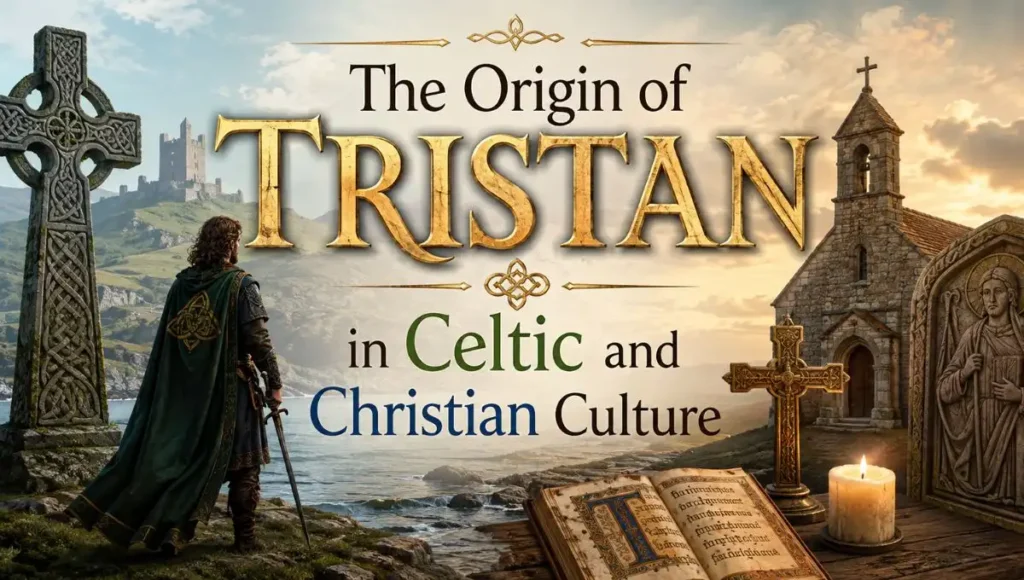
When Christianity reached Celtic Britain, missionaries rarely erased local culture; they redeemed it, much like Saint Patrick used the shamrock to explain the Trinity. Tristan followed the same pattern: a pre-Christian warrior name reinterpreted through a Christian lens.
| Celtic Root | Christian Reinterpretation |
| Warrior strength | Spiritual warfare (Ephesians 6) |
| Tribal loyalty | Faithfulness to Christ |
| Noble lineage | Royal priesthood (1 Peter 2:9) |
Read Also: 444 Meaning Bible: Discover God’s Divine Message in Numbers
Biblical Names Similar to Tristan
No biblical name sounds like Tristan, but several figures share its emotional arc: sorrow transformed into faith.
Job: Suffering and Faith
Job lost his family, wealth, and health, yet declared, “though he slay me, yet will I trust in him.” His honest sorrow without abandoned faith mirrors Tristan’s theme.
Jeremiah: Prophet of Sorrow
Known as the “weeping prophet,” Jeremiah faced rejection and heartbreak while staying faithful, proclaiming that God’s love “never ceases” (Lamentations 3:22).
Joseph: From Pit to Palace
Sold into slavery by his own brothers, Joseph endured false accusation and prison before rising to save nations proof sorrow can lead somewhere good (Genesis 50:20).
Comparison Table
| Name | Meaning | Biblical Theme | Link to Tristan |
| Job | Persecuted | Suffering to endurance | Sorrow refined by faith |
| Jeremiah | God will uplift | Prophetic grief | Weeping with hope |
| Joseph | He will add | Pit to palace | Transformation |
| Thomas | Twin | Doubt to belief | Struggle toward faith |
Thomas: Doubt to Belief
“Doubting Thomas” questioned the resurrection until he saw the risen Christ, declaring, “My Lord and my God!” (John 20:28) honest struggle can still end in deep faith.
Biblical Alternatives to Tristan
Want similar depth with direct scriptural roots? Consider:
- Asher – “happy” or “blessed”
- Nathanael – “gift of God”
- Ethan – “strong, enduring”
- Josiah – “the Lord supports”
Does Tristan Have Hebrew or Greek Roots?
No. Tristan is Celtic, not Hebrew or Greek, so there’s no direct biblical-language translation. Hebrew and Greek Scripture do contain words echoing its themes of sorrow, strength, and transformation, covered below.
Why Parents Choose Tristan: A Biblical Perspective
Christian parents rarely pick a name just because it sounds nice it usually carries a hope or value spoken over the child. Tristan appeals because it rejects toxic positivity, admitting life includes sorrow while pointing toward real hope.
- Naming is intentional (Genesis 2:19-20)
- Authenticity over forced positivity
- A reminder that hardship isn’t final
- Wide appeal across the U.S., U.K., Canada, and Australia
Tristan Name Meaning in Hebrew and Greek
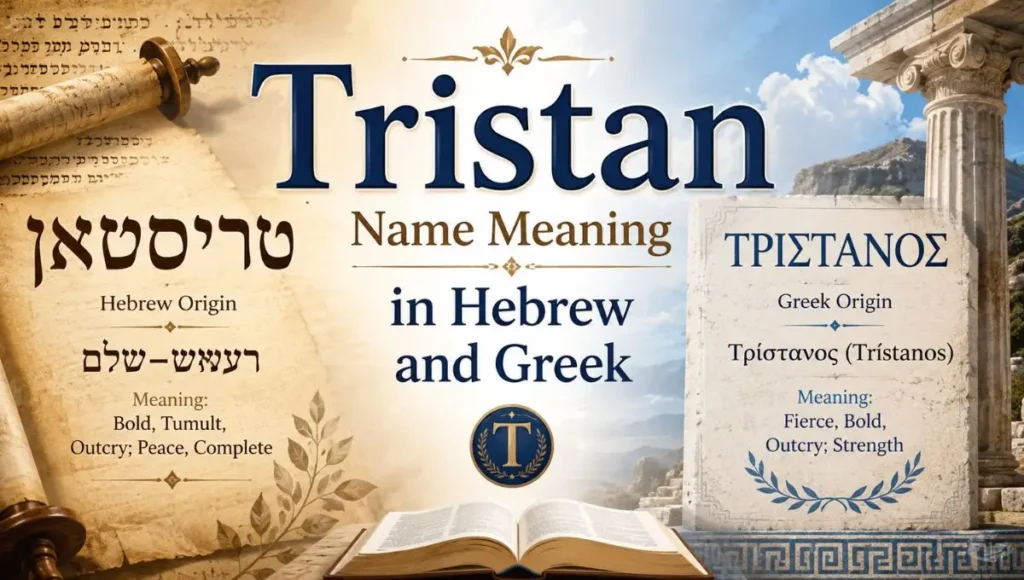
Tristan has no Hebrew or Greek translation, but biblical language offers vocabulary for the themes it carries.
Hebrew Concepts of Sorrow and Strength
- Atsab (עָצַב) – “to grieve” (Genesis 3:16)
- Chozeq (חֹזֶק) – “strength” (Joshua 1:9)
- Gibbor (גִּבּוֹר) – “mighty warrior,” echoing Tristan’s warrior heritage
Greek Spiritual Transformation Terms
- Thlipsis – “tribulation” (Romans 5:3)
- Hypomone – “patient endurance” (James 1:2-4)
- Metamorphoo – “to transform” (Romans 12:2)
Linguistic Comparison Table
| Concept | Hebrew | Greek |
| Sorrow | Atsab | Thlipsis |
| Strength | Chozeq | — |
| Endurance | — | Hypomone |
| Transformation | — | Metamorphoo |
Read Also: Iris Name Meaning in the Bible | A Message of Hope, Promise, and God’s Presence
The Cultural and Religious Impact of the Name Tristan
Beyond individual families, Tristan has left a mark across Christian culture worldwide.
Popularity Trends in Christian Communities
In the U.S., Tristan has held a spot in the SSA’s top 1,000 boys‘ names since 1971, peaked at #68 in 1996, and now ranks near #309 (2025 data), with strength across the South, Midwest, U.K., Canada, and Australia.
Cross-Denominational Acceptance
Catholic, Protestant, and Anglican families all use the name freely; it carries no denominational baggage, just shared values like perseverance and faith.
Celebrity Christian Usage
Several Christian worship leaders, pastors, and authors have quietly chosen Tristan for their children, often citing its theme of resilience.
Academic Perspectives
Psychologists who study name perception, including Albert Mehrabian’s work on first impressions, note that names carrying a sense of strength or depth shape how confidently a child is perceived.
Social Perceptions and Faith Communities
Within youth ministries, Tristan is easy to pronounce yet distinctive enough to stand out a balance many parents look for.
What the Bible Teaches About Names and Identity
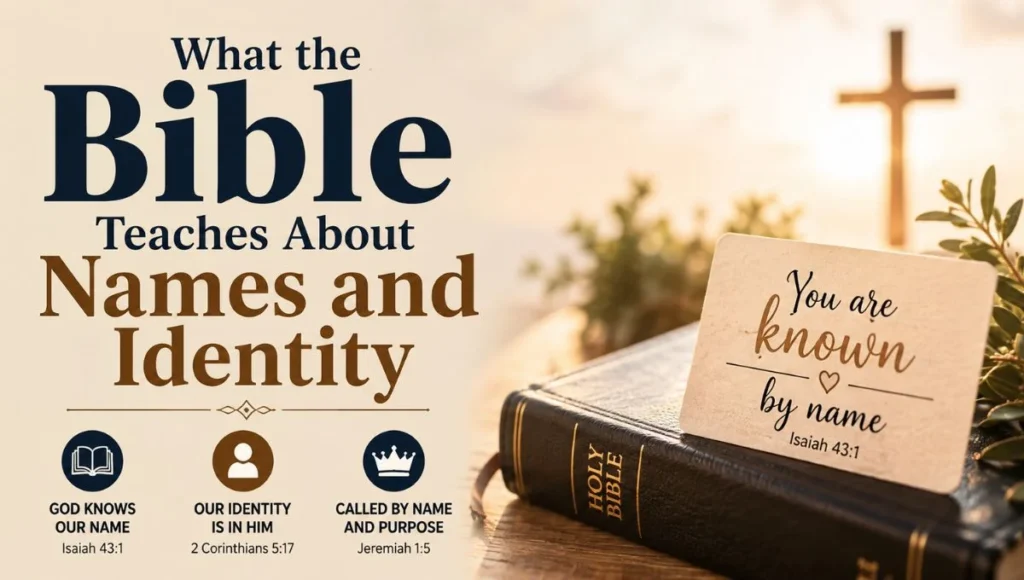
Scripture treats naming as meaningful, not accidental worth understanding before you decide.
God Names People Intentionally
Genesis 2:19-20 shows Adam naming the animals under God’s authority, framing naming as a God-given responsibility. God calls Abraham, Moses, and Samuel by name.
Biblical Names Change to Reflect Transformation
- Abram → Abraham (“father of many nations”)
- Jacob → Israel (“struggles with God”)
- Simon → Peter (“rock”)
- Saul → Paul (persecutor to apostle)
Names Reflect Character and Calling
Jesus (“the Lord saves”), Samuel (“heard by God”), and Isaac (“laughter”) all show names prophesying character, a pattern Christian parents still follow.
Identity Ultimately Comes from Christ
Romans 12:2 reminds believers that true transformation comes from Christ, not a label. Revelation 2:17 even promises a “new name” known only to God’s identity that outlasts any earthly one.
Practical Application for Parents
- Pray for wisdom first (James 1:5)
- Understand what the name declares
- Talk it over with your spouse
- Confirm spelling and pronunciation work day-to-day
Read Also: The Powerful Biblical Meaning of the Name CHARLOTTE
Is Tristan a Good Christian or Catholic Name?
Yes. A name doesn’t need to appear in Scripture to reflect godly character. Catholic families have long embraced Celtic-rooted names like Tristan, Brendan, and Aidan without official sainthood. For confirmation, parents can simply pair Tristan with a canonized saint’s name.
Tristan in Legends vs Christian Truth
Most people know Tristan through legend before its Christian symbolism. Here’s the comparison.
Legend Meaning:
In the medieval romance of Tristan and Isolde, the name represents forbidden love, loyalty, and tragic sacrifice devotion that ends in sorrow.
Christian Meaning (symbolic):
Christian tradition reframes the same qualities spiritually: loyalty becomes devotion to Christ, sacrifice mirrors the cross, and sorrow becomes the door to resurrection joy.
Frequently Asked Questions About Tristan Name Meaning Bible
What does Tristan mean spiritually?
Spiritually, Tristan is often associated with perseverance, inner strength, redemption, and personal growth. Although the name does not appear in the Bible, many Christians connect its symbolism with God’s ability to transform sorrow into hope through faith.
What does Tristan symbolize?
Tristan symbolizes courage, loyalty, resilience, and enduring love. Its legendary Celtic roots also represent bravery and faithfulness, while its spiritual meaning reflects overcoming life’s challenges with hope.
What does the name Tristan mean for a boy?
For a boy, Tristan traditionally means “bold,” “brave,” or is linked to the Celtic hero Tristan. It represents strength of character, honor, determination, and a compassionate heart.
What is a nickname for Tristan?
Popular nicknames for Tristan include:
- Tris
- Trist
- T
- Stan
- Tristy
- Tristy
Is Tristan a rare name?
No, Tristan is not considered a rare name. It has remained moderately popular in English-speaking countries for decades, especially among parents looking for a strong yet classic Celtic name.
What is the personality of someone named Tristan?
People named Tristan are often described as loyal, kind, courageous, creative, and independent. While personality isn’t determined by a name, Tristan is commonly associated with leadership, compassion, and resilience.
Is Tristan a sad name?
Not necessarily. Some scholars connect Tristan with a Celtic word related to “sorrow,” but the name is more widely recognized for its themes of bravery, loyalty, and overcoming hardship rather than sadness itself.
What is the girl version of Tristan?
Common feminine variations of Tristan include Trista, Tristin, Tristyn, and Trysta. These names retain the same Celtic heritage while offering a more feminine style.
What ethnicity is the name Tristan?
Tristan is primarily of Celtic origin, especially linked to Welsh and Cornish traditions. It later became popular across France, England, and other European cultures through medieval legends and literature.
Conclusion
Tristan Name Meaning Bible searches reveal something beautiful: a name doesn’t need direct scriptural roots to carry real spiritual weight. From its Celtic beginnings to its Christian retelling, Tristan has always pointed toward one idea: sorrow is real, but it never gets the final word.
Whatever name you choose, your child’s true identity is rooted in Christ, not a word on a birth certificate. Naming thoughtfully is one small way of stewarding the hope you carry for their life. If sorrow turned to strength speaks to your family, Tristan may be it.

Welcome to Inspiredwordz! I’m M Abdullah. Christian Faith Writer | 6+ Years Bible Study Experience | Founder of (Inspiredwordz.com)
Sharing prayers, Bible Name Meaning and biblical wisdom to strengthen your faith.